Tidal Creeks, Marsh Flats, and Open Water

Fishing in
Murrells Inlet

Choose a short inshore run for redfish and flounder, or commit to nearshore and offshore water for mackerel, cobia, mahi-mahi, and bottom fishing.

A Serious Fishing Town

Murrells Inlet has been a commercial and sport-fishing hub for generations. The inlet's unique geography — where tidal creeks, marsh flats, and open ocean converge — creates ideal conditions for a remarkable diversity of fish species year-round. The local charter fleet operates out of multiple docks along the Marsh Walk and surrounding waterways.

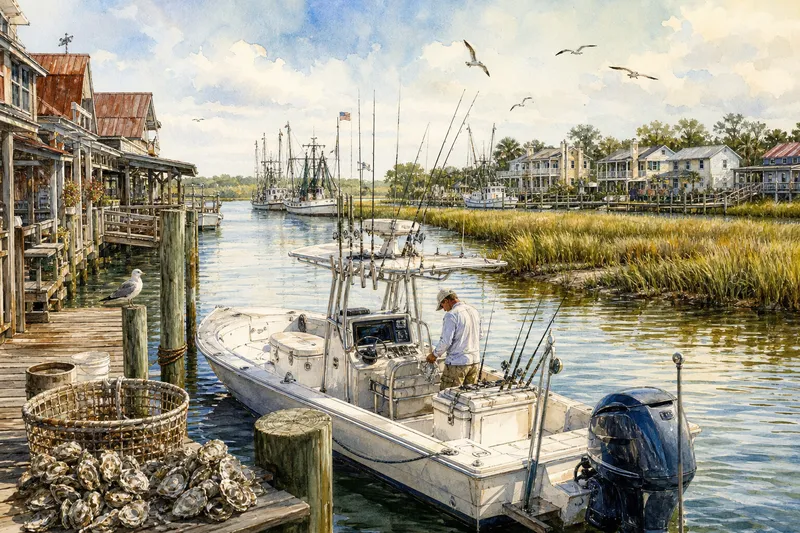
Watercolor cue art of a Murrells Inlet charter boat with rods ready at sunrise

Boat-morning cue

Fishing days start early because wind, tide, and boat schedules decide the departure. Confirm the expected return with the captain before making a dinner reservation.

Choose Your Trip

Inshore Fishing

Target redfish, speckled trout, flounder, and black drum in the tidal creeks, grass flats, and estuaries of the inlet. Great for beginners and families — half-day trips are perfect for kids.

Half-day from ~$400–$600

Near-Shore / Gulf Stream

Head 20–40 miles offshore for Spanish mackerel, king mackerel, cobia, and amberjack. The Gulf Stream runs remarkably close to the SC coast, making these productive half or full-day trips.

Full-day from ~$1,200–$1,600

Deep Sea Offshore

Bottom fish the wrecks and natural ledges for grouper, snapper, and sea bass. Trolling for mahi-mahi, wahoo, and tuna when the dolphin fish run. The most serious fishing Murrells Inlet has to offer.

Full-day from ~$1,600–$2,400

What's Running by Season

Spring (Mar–May)

Spanish mackerel arrive. Redfish and speckled trout are excellent inshore. Cobia begin their annual migration up the coast — sight-casting for cobia is thrilling. Flounder pick up.

Summer (Jun–Aug)

Peak season for offshore trolling — mahi-mahi, wahoo, and sailfish. King mackerel dominate near-shore. Inshore: redfish, flounder, and jack crevalle. Shrimp are in the creeks.

Fall (Sep–Nov)

Best month for trophy redfish on the flats. Flounder are running hard to their offshore spawning grounds. King mackerel make a fall run. Offshore bottom fishing is excellent for grouper and snapper.

Winter (Dec–Feb)

The inlet never really sleeps. Black drum and puppy drum are the top inshore target. Offshore: deep grouper and snapper bottom fishing on good weather days. Fewer crowds, sometimes best value charters.

Fishing-day choices

Pick inshore action, offshore ambition, or seafood-town recovery

Inshore action

Better for shorter trips, mixed groups, and steadier conditions. Let tides and guide availability shape the plan.

Offshore ambition

Go bigger only when weather, budget, and stomachs agree. The payoff is real, but so is the commitment.

Seafood-town recovery

After the boat docks, choose a nearby seafood dinner or a short MarshWalk sunset lap rather than adding another long drive.

Fishing Gear

Charter boats provide rods and tackle — but serious anglers bring their own. Here's what to look for.

Murrells Inlet Fishing FAQ

Questions to settle before choosing an inshore, nearshore, or offshore charter from Murrells Inlet.

01How long should a first charter be?+

A four-hour inshore trip is the easiest first choice for families, beginners, and anyone unsure about open water. Six- to twelve-hour offshore trips add running time, bigger water, and a much longer commitment.

02What does a charter usually provide?+

Most licensed charter operators provide the boat, captain, rods, tackle, bait, safety equipment, and fishing-license coverage for passengers. Confirm fish cleaning, drinks, food, and gratuity expectations before paying a deposit.

03Do I need a South Carolina fishing license?+

Charter passengers are commonly covered by the vessel's license, but shore, pier, and private-boat anglers may need their own South Carolina saltwater license. Verify the current rule with the captain or the South Carolina Department of Natural Resources.

04Is inshore or offshore fishing better for children?+

Inshore trips usually involve shorter runs, calmer water, more frequent casting, and an easier return if weather or attention spans change. Ask the captain about age limits, life jackets, shade, and restroom access.

05How can I reduce seasickness risk?+

Choose inshore water if anyone is uncertain, avoid a heavy breakfast, hydrate, and discuss medication with a clinician before the trip. Offshore boats cannot remove the swell, even on a clear day.